
Every podcast, LinkedIn post, and conference speaker agrees: you need AI in your business. They just never say what that means when you're a four-person operation trying to get through the week.
Most small business owners aren't anti-AI. They're stuck. The advice is either too vague ("just start using it!") or too technical ("fine-tune a model on your proprietary dataset!"). Neither helps when you've got payroll to run and a website that still says "Holiday Hours" from December.
So here's a practical way to figure out where AI actually fits.
The Problem Isn't You. The Problem Is Bad Advice.
Two camps dominate the AI conversation right now. Tech people who assume you know what a "prompt" is, and marketers who promise AI will run your entire business by next Tuesday.
Reality is less exciting and more useful. AI does real work for small businesses. But it's not magic, and it's not one-size-fits-all. What helps an e-commerce brand will look nothing like what helps a law firm or a landscaping company.
You don't need to understand how AI works under the hood. You need a way to figure out where it helps you. That takes about 30 minutes.
The 3-Step Framework: Find Your AI Opportunities in 30 Minutes
Grab a notebook or open a blank doc.
Step 1: List Your Repetitive Tasks
Write down everything you or your team does regularly. Weekly, daily, monthly. Don't filter. Just dump it all out.
Answering customer emails. Writing social media posts. Creating invoices. Scheduling appointments. Following up with leads. Updating your website. Writing proposals. Onboarding new clients.
You'll probably end up with 15 to 30 items. Good.
Step 2: Identify the Tasks That Follow a Pattern
Go through the list. Star anything that follows a roughly predictable pattern. The question to ask: "Could I write a rough template or set of instructions for how this gets done?"
Yes? Star it. If the task requires deep personal judgment, creative intuition, or a relationship built over years, skip it.
About half the list usually gets a star.
Step 3: Those Are Your AI Opportunities
Every starred item is a task where AI can do the work or dramatically speed it up. That's the whole framework.
Nobody's looking for a revolutionary transformation here. The boring, repetitive stuff that eats your time and follows a pattern? That's where AI is absurdly good.
What This Looks Like in Real Life
Frameworks are nice. Examples are better.
Social Media Content
Before: Two hours every week staring at a blank screen trying to think of posts. Half the time, nothing gets posted at all.
After: Feed AI a few bullet points about the week, and it drafts five to seven posts in ten minutes. Tweak them, add your voice, schedule them. Twenty minutes total. The other hour and forty minutes are yours again.
Customer Email Responses
Before: The first hour of every morning goes to answering the same questions. What are your hours? Do you offer this service? How does pricing work?
After: AI drafts responses from templates you've approved. Review. Send. Or put an AI chatbot on your website and those emails stop arriving in the first place. That first morning hour just opened up.
Proposals and Quotes
Before: Every new lead means writing a custom proposal from scratch. Takes 45 minutes to an hour. Three potential clients are waiting for follow-up because there hasn't been time.
After: Plug in the project details. AI generates a professional proposal from your past work and pricing structure. Ten minutes. Done. Money stops sitting on the table because follow-up actually happens.
Bookkeeping and Data Entry
Before: One Sunday afternoon a month sorting receipts, categorizing expenses, updating spreadsheets. Nobody's idea of a good time.
After: AI-powered tools categorize transactions, flag anomalies, and generate reports automatically. Monthly bookkeeping drops from four hours to 30 minutes of review. Your Sundays improve.
"But What About..."
Three fears come up constantly. All three are reasonable. None of them should stop you.
"AI is going to replace me."
It won't. AI handles the repetitive, pattern-based work. That frees up time for the things that actually require a human: building relationships, making strategic decisions, doing the creative thinking your business runs on. Nobody's hiring a chatbot to be the face of your company.
"I'm not technical enough."
If you can write an email, you can use AI. The tools are designed for regular people, and the interfaces get simpler every month. When you need something more customized, that's what consultants are for. You don't need to become a developer. You need someone to set it up right.
"It's too expensive."
Most useful AI tools for small businesses cost between zero and fifty dollars a month. Many have free tiers that are more than enough to start. The math tends to resolve itself quickly: if AI saves you five hours a week and your time is worth a hundred dollars an hour, that's two thousand dollars a month in reclaimed time for the cost of a few subscriptions.
Where People Get Stuck
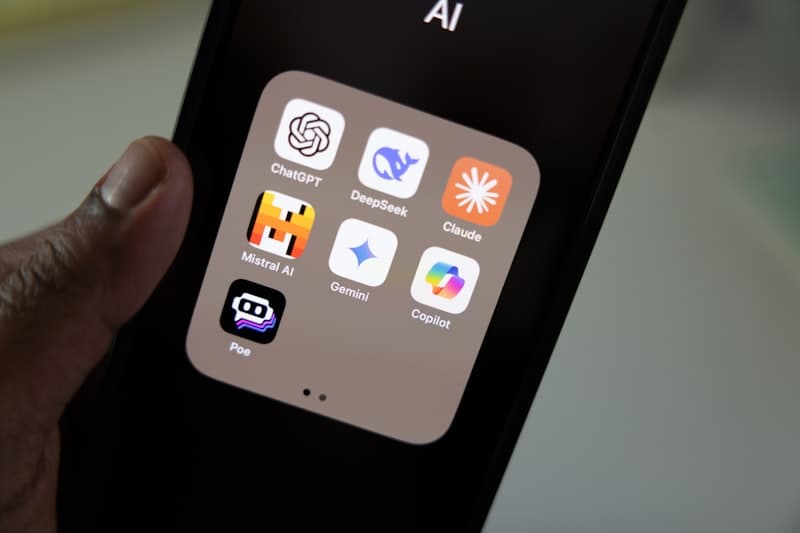
The framework above will help you spot opportunities. And you can absolutely start experimenting on your own with ChatGPT, Claude, or any of the dozens of AI-powered apps available.
But there's a gap between tinkering and building something that works reliably. The pattern is predictable: someone signs up for three AI tools, uses them inconsistently for a month, and concludes that AI doesn't work for their business.
It didn't fail because AI doesn't work. It failed because nobody connected it to actual workflows. Nobody trained it on specific business context. Nobody built the automations that make it hands-off.
That's the difference between "playing with AI" and "AI is saving me ten hours a week." It's a gap worth closing.
The Bottom Line
You don't need to understand machine learning. You don't need a full-time tech person. You don't need to overhaul your entire business.
Find the repetitive, pattern-based tasks eating your time. Get the right tools set up to handle them. Start with one. See results. Expand from there.
The businesses that figure this out now will have a real advantage over the ones still waiting. Not because AI is magic, but because time is the one resource you can't manufacture, and AI gives a lot of it back.
If this framework was useful but you want help actually running through it, get in touch. Happy to talk through what makes sense for your specific situation.