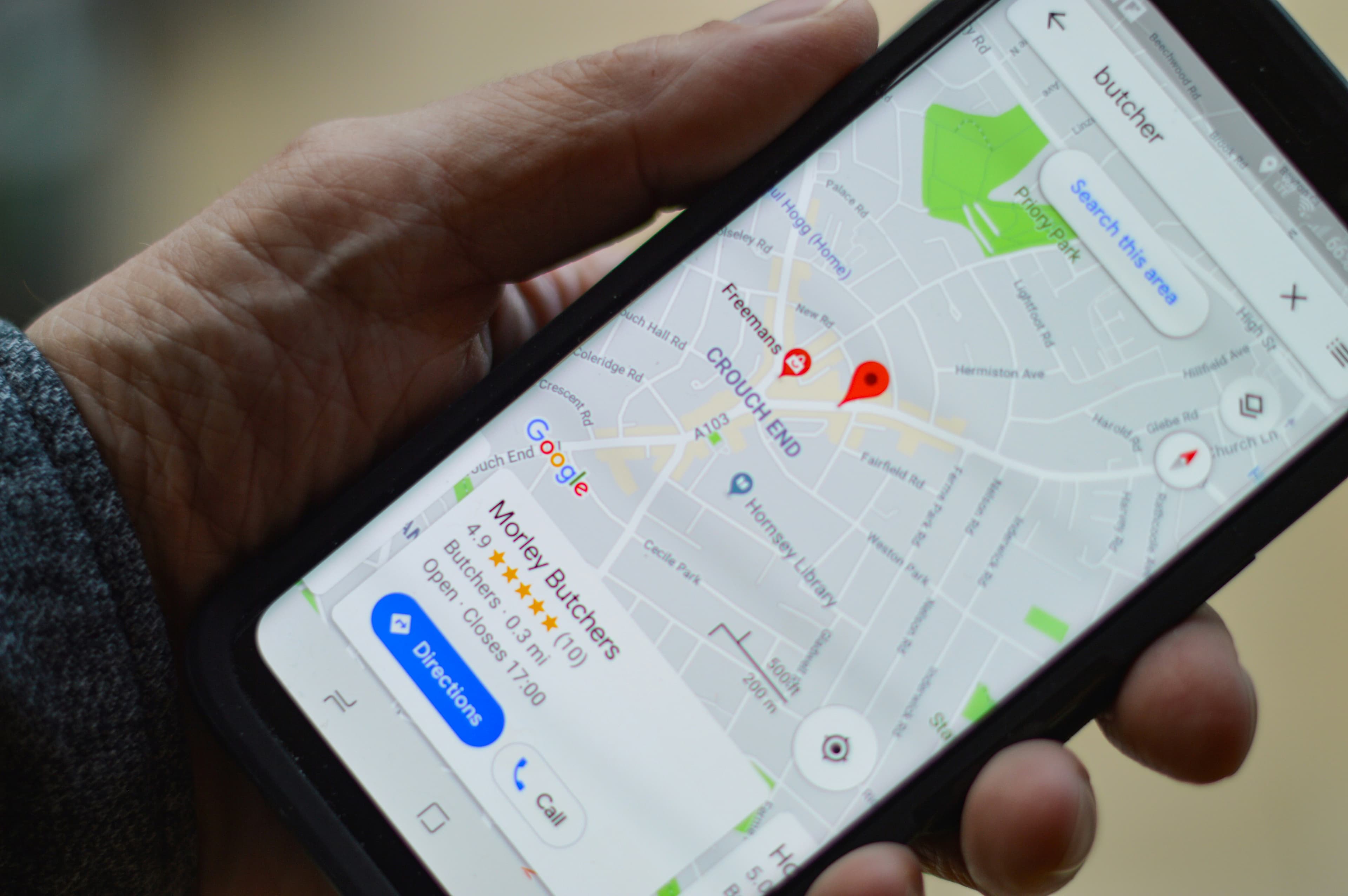

Picture this. You rent an Airbnb in Fish Hoek for Easter weekend. First morning, you want coffee. You open Google Maps, search for coffee shops nearby, and get nothing. You ask ChatGPT. Also nothing. Later that day, you take a walk down Main Street and there is a new cute coffee shop on literally every corner.
But you've already had your morning coffee.
This is the WhatsApp economy in action. Ninety-four percent of South Africans with internet access use WhatsApp, and a significant portion of the country's small businesses run entirely through it. No website, occasionally an Instagram, and a phone number that gets shared by word of mouth. It works until someone who doesn't already have that number tries to find you.
Most of these businesses do have a Google Maps listing, which is worth roughly what a Yellow Pages entry was worth in 2003. It confirms you exist. It doesn't convince anyone to call.
Think about how you actually use Maps. You search, find a few results nearby, and the first thing you do is tap through to see if there's a website. If there isn't one, there's a small but immediate flash of doubt. Is this place still open? Is it legitimate? You might still go, but something shifted. A Maps pin gets you found. A missing website quietly undermines you the moment someone finds you.
The Customers Who Hired Someone Else
Someone moves to a new area. They need a caterer, a bookkeeper, a furniture maker, a designer. They search. If your business exists only in WhatsApp threads, that search comes up empty. Someone else gets the job. You never find out you were in the running.
This isn't uniquely South African. Business press in Nigeria coined the term "WhatsApp economy" for it. The UNDP surveyed over a thousand small businesses across thirteen developing countries and found that 90% of those using any digital tools at all were on WhatsApp or Facebook, not websites, not anything a search engine can read. Kenya, Nigeria, Brazil, Indonesia, India, the UAE: same pattern. Almost entirely invisible to search.
And now it's getting worse.
The AI Version of the Same Problem
Think about the last time you asked an AI something. Not for work, just for yourself. Why does my shoulder hurt when I lift my arm? My dog hasn't eaten in two days, should I be worried? My toilet keeps running, what's wrong with it? My car is making a grinding noise when I brake. People are asking ChatGPT, Claude, and Perplexity these questions millions of times a day, and Google AI Overviews now surfaces AI-generated answers in roughly one in four searches.
You weren't looking for a business. You had a problem and you wanted an answer. The AI gives you one, and then, almost as a footnote, it adds: you should probably see someone about that. A physio. A vet. A plumber. A mechanic. Here are a few near you.
That footnote is where businesses get discovered now.
Forty million people ask ChatGPT health questions every single day. Seventy percent of those conversations happen outside clinic hours, at night, on weekends, when there's nobody to call. The AI fills the gap and makes the referral. The businesses it refers are the ones it can actually find information about: businesses with websites, with Google profiles, with content the AI can read and cite.
A WhatsApp chat history is none of those things. It's private, it's not indexed, and the AI has no way to know it exists. So when someone asks Claude to recommend a massage therapist in Cape Town or a caterer in Johannesburg, the results come back based entirely on who the AI can find. The WhatsApp-only business isn't considered and rejected. It's not considered at all.
Google returns ten results and the user decides. AI gives two or three recommendations with a quiet confidence that most people don't question. Twenty-six percent of established brands already have zero presence in AI search results. AI referral traffic grew 527% in five months in 2025. The businesses collecting that traffic all have one thing in common.
What Actually Fixes This
A website. Not a complex one. Five pages covering what you do, some examples of your work, and a contact button. That's enough for Google to index you, enough for AI tools to find and cite you, and enough to give a potential client something to look at before they decide to reach out. This is what the SEO industry is now calling Generative Engine Optimization (GEO): making sure the content AI tools read when forming recommendations includes yours.
The website is not the destination. It's the sign on the door. The conversation still happens on WhatsApp. The difference is that people can find the door in the first place.
Why Now
AI is currently forming opinions about which businesses are worth recommending. Yours should be in the room for that conversation.
AI search is early, and early presence compounds. The businesses showing up consistently in AI recommendations right now are building a position that gets harder to displace over time. AI tools develop patterns around who they cite in a given category and location. Getting in before those patterns solidify is considerably easier than trying to break in after.
The best time to plant a tree was twenty years ago. The second best time is before ChatGPT decides someone else is the best plumber in Cape Town.
If you want to figure out what your business actually needs to be findable, a strategy session is a good place to start.